How Many Pages Should a Resume Be?
For most professionals, one to two pages is ideal. But the real question isn't about length — it's about relevance.
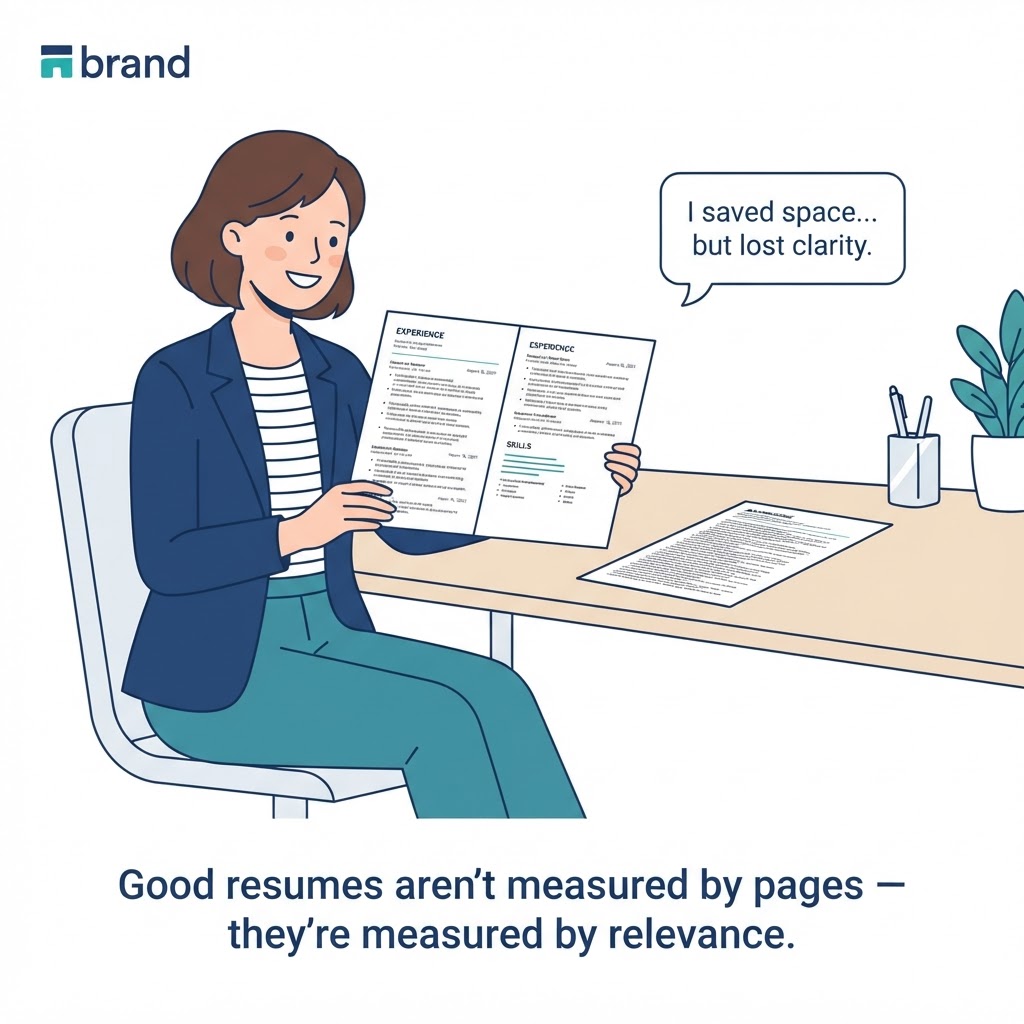
For most professionals, one to two pages is the ideal resume length. But the real question isn't about counting pages — it's about whether every line on your resume helps a recruiter decide you're the right fit.
What You'll Learn
- •The ideal resume length for your experience level
- •Why recruiters don't count pages — they look for relevance
- •Common mistakes that make resumes longer without adding value
- •When a two-page resume is the right choice
- •A quick decision guide to choose one page or two
- •How to evaluate whether every section earns its place
✅ Short Answer
For most professionals, one to two pages is the ideal resume length.
- 0–7 years of experience: Aim for one page.
- 8+ years of relevant experience: Two pages are perfectly acceptable — provided every line adds value.
Remember, recruiters don't count pages. They look for relevance.
Why It Matters
One of the biggest resume myths is that every resume must fit on a single page.
The truth is, recruiters don't reject resumes because they're two pages long. They reject resumes because they're filled with information that doesn't help them decide whether you're a good fit.
If your second page showcases meaningful achievements, leadership experience, promotions, or measurable business impact, it's doing its job.
But if it's filled with outdated skills, irrelevant responsibilities, or unnecessary details, it's only making the recruiter's job harder.
The goal isn't to write less — it's to write what matters most. For a deeper dive on this, read about Myth 3: why a one-page resume isn't always better.
Common Mistakes
- ❌ Shrinking the font to squeeze everything onto one page
- ❌ Listing every job you've ever had, regardless of relevance
- ❌ Repeating the same responsibilities across multiple roles
- ❌ Adding hobbies, references, or outdated technical skills just to fill space
📊 One Page vs Two Page
One Page Resume:
- 0–7 years of experience
- Early career professionals
- Focus on key achievements
- Keep it concise
Two Page Resume:
- 8+ years of experience
- Senior professionals or specialists
- Showcase career progression and leadership
- Keep it relevant
💡 CVDraft Tip
Instead of asking, "Can I make it one page?" ask yourself, "Does every section help me get this interview?"
If the answer is no, remove it.
If the answer is yes, keep it — even if it takes two pages.
🎯 Hiring Language Perspective™
A one-page resume isn't automatically better.
A two-page resume isn't automatically worse.
Recruiters don't reward brevity. They reward clarity, relevance, and evidence of impact.
Every line on your resume should earn its place.
📊 Quick Decision Guide
How much relevant experience do you have?
- 0–7 Years → One page
- 8+ Years → Ask: Can every extra section demonstrate value?
- Yes → Two pages
- No → Remove it
🔗 Related Quick Bites
- QB-001: What Is an ATS Score?
- QB-002: Resume vs CV: What's the Difference?
- QB-004: Can ATS Read PDF Resumes?
- QB-005: What Are Resume Keywords?
- QB-006: Should Every Resume Be Customized?
"Good resumes aren't measured by pages — they're measured by relevance."
Recruiter's Advice
"Recruiters don't reward brevity. They reward clarity, relevance, and evidence of impact. Every line on your resume should earn its place."
Key Takeaways
- One page for 0–7 years of experience, two pages for 8+ years
- Recruiters don't reject resumes for being two pages — they reject them for being irrelevant
- Never shrink fonts or cram text just to fit one page
- A second page is justified when it adds meaningful achievements or leadership
- Ask 'Does every section help me get this interview?' — not 'Can I fit it on one page?'
- Good resumes aren't measured by pages — they're measured by relevance
Frequently Asked Questions
Build a Resume That Wins the 6-Second Test
AI writes the bullet points — you fill in the details. Get a clean, ATS-friendly resume in minutes.
Build My ResumePut This Into Practice
Analyze My Resume
Compare your resume against a real job description and identify ATS keyword gaps.
Go to Resume AnalyzerGenerate My Cover Letter
Create a tailored cover letter that matches your resume and target role.
Go to Cover Letter GeneratorContinue Your Journey
You have completed
✔ ⚡ Quick Bites Chapter 3
Continue with
➡ ⚡ Quick Bites Chapter 4
Can ATS Read PDF Resumes?