Should I Include Every Job I've Ever Had on My Resume?
Your resume isn't a complete employment record—it's a marketing document designed to prove you're the right fit for a specific opportunity.
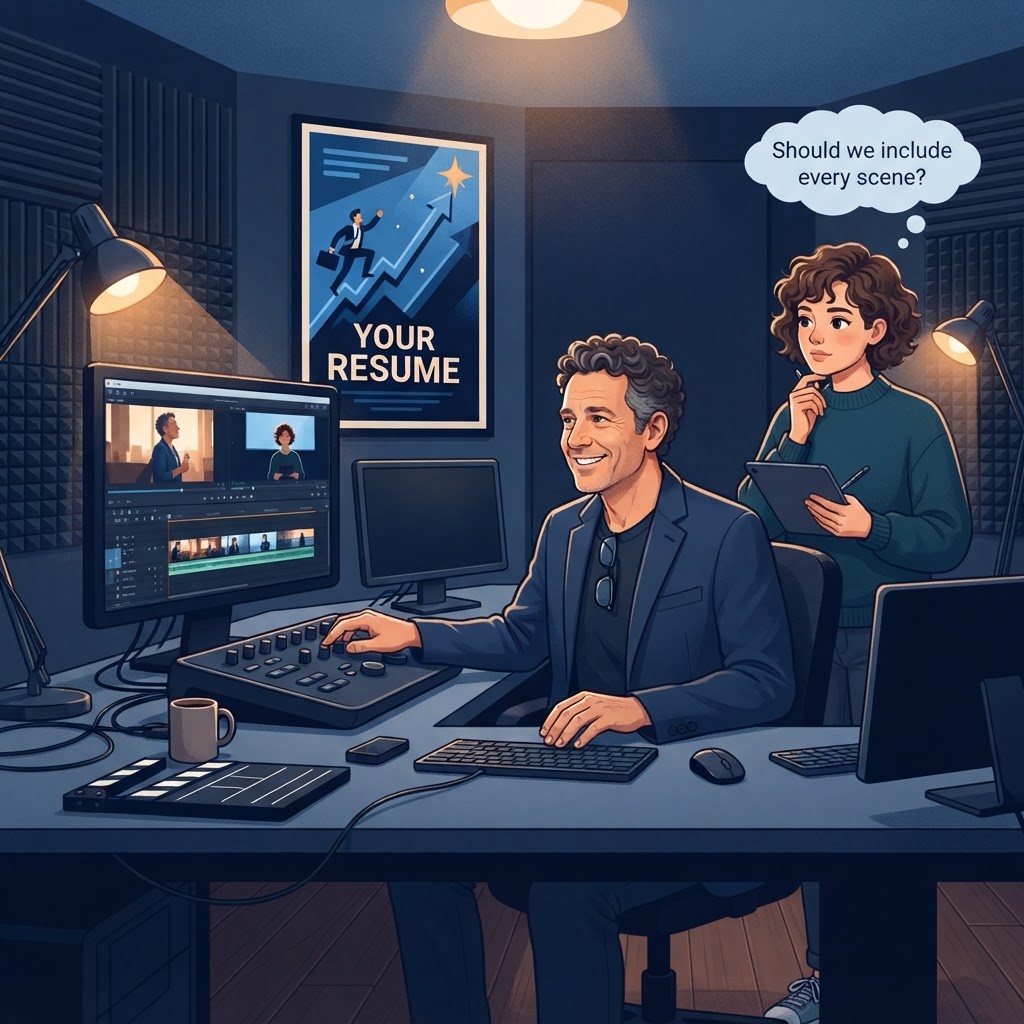
No. Include the experience that's most relevant to the role you're applying for. Your resume isn't a complete employment record—it's a marketing document designed to demonstrate why you're the right fit for a specific opportunity. If an older role doesn't strengthen your application, summarize it or leave it out.
What You'll Learn
- •Why your resume is a marketing document, not a complete employment record
- •How to decide which jobs to keep, summarize, or omit entirely
- •The movie-trailer principle: highlight your best scenes, not every minute
- •Common mistakes that bury your most relevant experience
- •How recruiters actually use older roles when evaluating candidates
- •A simple decision flow to test every job on your resume
✅ Short Answer
No. Include the experience that's most relevant to the role you're applying for.
Your resume isn't a complete employment record—it's a marketing document designed to demonstrate why you're the right fit for a specific opportunity.
If an older role doesn't strengthen your application, summarize it or leave it out.
Why It Matters
Many professionals believe that omitting older or unrelated jobs makes their resume incomplete.
It doesn't.
Imagine you're applying for a Senior Data Analyst role with 12 years of experience.
Does the recruiter need to know every temporary job, internship, or unrelated role from the beginning of your career?
Probably not.
What they care about is whether your recent experience proves you can succeed in the role they're hiring for.
Think of your resume like a movie trailer.
It highlights the best scenes—not every minute of the film.
Common Mistakes
- ❌ Listing every job since graduation
- ❌ Giving equal importance to irrelevant roles
- ❌ Including outdated technologies or responsibilities
- ❌ Making recruiters search for your most relevant experience
📊 Quick Comparison
Good Resume ✅
- Focuses on relevant experience
- Highlights recent achievements
- Easy to scan
Weak Resume ❌
- Includes every job ever held
- Buries important information
- Overwhelming timeline
💡 CVDraft Tip
If an older role doesn't strengthen your case for the position you're applying for, summarize it in one line or omit it.
Use that space to showcase recent achievements instead.
🎯 Hiring Language Perspective™
Recruiters don't hire your entire career.
They hire the part of your career that's most relevant to their future.
📊 Decision Flow
For every job on your resume, ask:
- Career History → Is this role relevant to the job I'm applying for today?
- YES → Keep it, with achievements and impact
- NO → Summarize in one line, or remove it entirely
Your resume should make the recruiter's decision easier—not harder.
🔗 Related Quick Bites
- QB-003: How Many Pages Should a Resume Be?
- QB-006: Should Every Resume Be Customized?
- QB-014: How Far Back Should My Resume Go?
- QB-019: What Do Recruiters Look at First?
"A great resume highlights your best chapters—not every page of your career."
Recruiter's Advice
"Recruiters don't hire your entire career. They hire the part of your career that's most relevant to their future."
Key Takeaways
- Include the experience most relevant to the role you're applying for
- Omitting older or unrelated jobs doesn't make your resume incomplete—it makes it focused
- Summarize irrelevant roles in one line rather than giving them equal weight
- Your resume is a movie trailer, not the full film—highlight the best scenes
- Recruiters care about recent, relevant experience that proves you can succeed
- Use freed-up space to showcase recent achievements instead
Frequently Asked Questions
Build a Resume That Wins the 6-Second Test
AI writes the bullet points — you fill in the details. Get a clean, ATS-friendly resume in minutes.
Build My ResumePut This Into Practice
Analyze My Resume
Compare your resume against a real job description and identify ATS keyword gaps.
Go to Resume AnalyzerGenerate My Cover Letter
Create a tailored cover letter that matches your resume and target role.
Go to Cover Letter GeneratorContinue Your Journey
You have completed
✔ ⚡ Quick Bites Chapter 20
Continue with
➡ ⚡ Quick Bites Chapter 21
Do Recruiters Really Read Every Resume?