How to Write a Cover Letter That Doesn't Sound Like a Cover Letter
The format is dying. The underlying skill — making a compelling case for yourself in writing — has never mattered more.
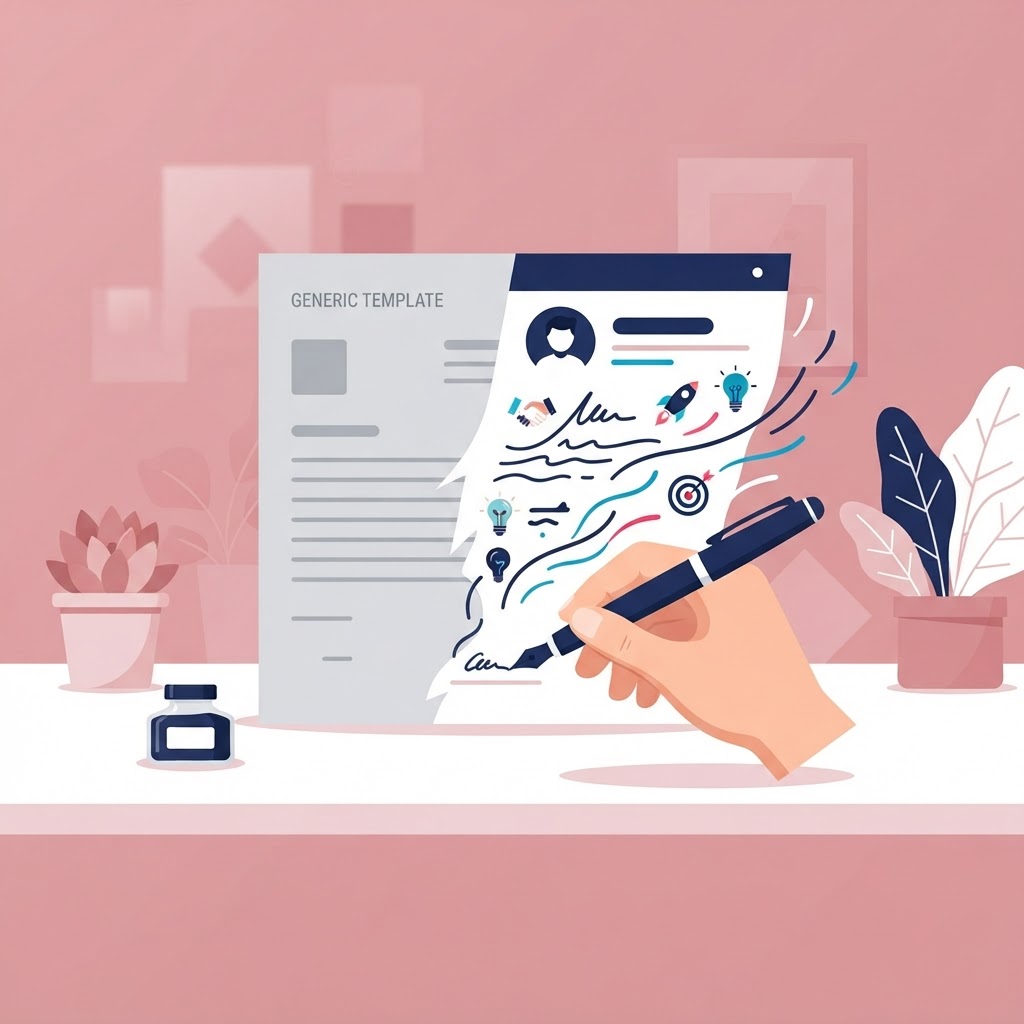
Most cover letters begin with some version of: 'I am writing to express my strong interest in the [Position] role at [Company]. With my X years of experience in Y, I believe I am an excellent candidate...'
The hiring manager has read this sentence 200 times this week. By the second clause, they've stopped reading.
And yet the instinct behind the cover letter — to make a direct, personal argument for your candidacy — is sound. The execution is just almost universally terrible.
What You'll Learn
- •What a cover letter is actually for (and what it isn't)
- •Why the standard opening fails — and what works instead
- •How to skip the obligatory 'I admire your company' paragraph
- •A confident closing that doesn't sound passive or desperate
- •Why the cover letter format is dying but the skill isn't
- •How to make a direct, personal case for your candidacy
What a cover letter is actually for
A cover letter has one job: to make the reader want to look at your resume. It's not a summary of your resume. It's not a list of your achievements.
It's a short, direct answer to the question: why you, for this role, at this company, right now? That's it.
If you can answer that question in three paragraphs that sound like they were written by a person with a point of view — you've written a good cover letter.
The opening that actually works
Start with the thing that most directly qualifies you for this specific role. Not a statement about your interest in the company. Not a declaration of how excited you are.
The most relevant thing you've done that maps to what they need. 'For the last four years I've been building financial models that helped a Series B SaaS company understand its unit economics well enough to raise a Series C.'
That's a first sentence a CFO reads and thinks: tell me more.
The company paragraph problem
The obligatory 'I've always admired your company because...' paragraph is where most cover letters go to die. Generic praise is worse than no praise — it signals that you didn't do real research and you're just following a template.
If you have a genuine, specific observation about the company that connects to why you want to work there, include it. One sentence.
If you don't have that, skip the paragraph entirely. No one will notice it's missing.
The closing
End with a clear, confident statement about what you're offering — not a plea for consideration. 'I'd welcome the chance to talk through how my background in X maps to what you're building' is confident.
'I hope you'll consider my application and look forward to hearing from you' is passive. In competitive markets, passive signals don't move people to action.
"A cover letter isn't a formality. It's the first piece of writing your potential employer will read. Make it count."
Recruiter's Advice
"A cover letter isn't a formality. It's the first piece of writing your potential employer will read. Make it count."
Key Takeaways
- A cover letter's job is to make the reader want to look at your resume
- Open with your most relevant qualification, not your interest in the company
- Skip generic company praise — one specific observation beats five generic ones
- End with a confident offer, not a passive plea for consideration
- Write like a person with a point of view, not a template
- The format is dying, but the skill of making a written case has never mattered more
Frequently Asked Questions
Generate a Cover Letter That Doesn't Sound Like One
Create a tailored, confident cover letter that adds context your resume can't — in under a minute.
Generate My Cover LetterPut This Into Practice
Analyze My Resume
Compare your resume against a real job description and identify ATS keyword gaps.
Go to Resume AnalyzerGenerate My Cover Letter
Create a tailored cover letter that matches your resume and target role.
Go to Cover Letter GeneratorContinue Your Journey
You have completed
✔ 📘 Resume Intelligence Chapter 2
Continue with
➡ 📘 Resume Intelligence Chapter 3
Your Resume Is Not Being Rejected. It's Being Misunderstood.
Original Concepts Notice
This publication contains original concepts, frameworks, terminology, and educational models developed as part of The CVDraft Framework™.
Names such as The Authenticity Ceiling™ and other CVDraft Framework™ concepts are original CVDraft brand terminology and should always be presented consistently.
© CVDraft. All Rights Reserved.